Key Takeaways
Your first visit does not need to be a test of fitness or confidence. I would keep the plan simple, move at a comfortable pace, and treat learning the space as part of the session.
- Choose a manageable goal and session length.
- Begin with easy cardio and gentle dynamic movements.
- Use a few familiar, full-body exercises with light resistance.
- Rest when you need to, and adjust anything that feels uncomfortable.
- Make a brief note of what you tried and leave time to recover.
What to know before your first gym session
A first visit can feel unfamiliar simply because there is so much equipment and activity around you. I find it helps to decide what a successful session means before walking in: perhaps getting oriented and trying a few movements. You do not need to know every machine or complete a long workout. A straightforward first gym session plan can give you a starting point without turning the visit into a performance.
Set a simple, realistic goal
I would choose one goal that is easy to recognise when you have done it, such as learning where the main equipment is and trying a handful of basic movements. That gives the session a purpose without asking you to prove anything. If you leave feeling more familiar with the space, that counts as a useful first visit.
Choose a session length you can manage
A shorter visit can be easier to fit into your day and less daunting than planning to stay until you are exhausted. I suggest setting a loose time limit that includes getting changed, warming up, and finding equipment. The exact timing is yours to adjust; this simple breakdown is just a way to picture the visit.
| Part of the visit | What it might include | Rough time to allow |
|---|---|---|
| Getting settled | Changing and finding your way around | A few minutes |
| Warm-up | Easy cardio and gentle movement | About five to ten minutes |
| Strength work | A small selection of exercises | About fifteen to twenty minutes |
| Wrapping up | Easy movement and gathering your things | A few minutes |
Think of the table as a flexible outline, not a timetable you must obey. If you need longer to adjust a machine or would rather finish early, you can do that and still call the visit a success.
Bring comfortable clothes, water, and a workout towel
I would wear clothes that let me move freely and bring water and a small towel if the gym expects members to wipe equipment after use. A bag with only the basics is easier to manage than one packed for every possible situation. Before you leave, check whether the gym has any entry or equipment-use requirements so there are no surprises at reception.
Ask gym staff how to use unfamiliar equipment
If a machine is new to you, I would ask a staff member to show you how it is adjusted and operated. You do not have to pretend you already know what every lever does. A quick demonstration can make the next step clearer, and asking is a normal part of getting oriented.
How to warm up and get comfortable
The warm-up is a chance to arrive gradually rather than rush straight into harder effort. I use it to notice how the space feels, get moving, and decide whether my plan needs adjusting. Keep the first few minutes easy enough that you can settle into your breathing and surroundings. There is no need to make the warm-up complicated.
Start with five minutes of easy cardio
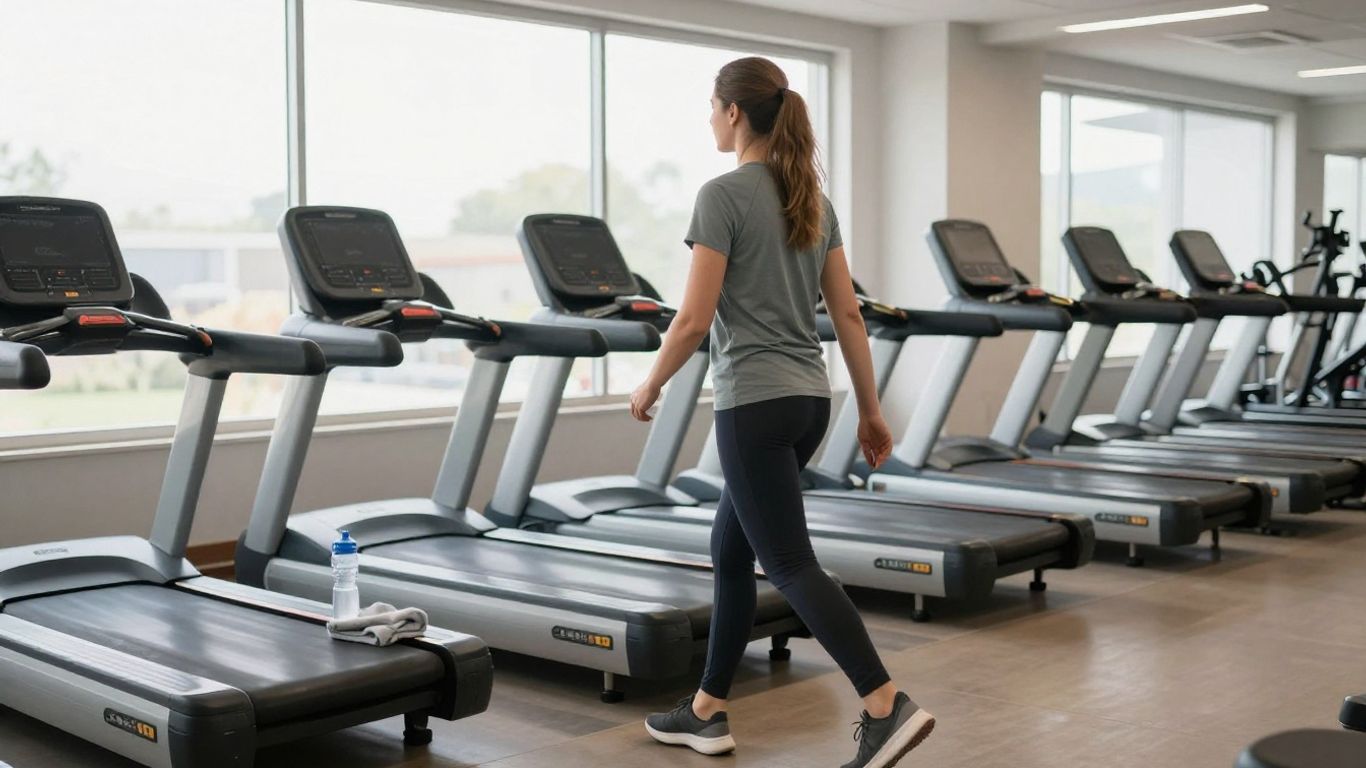
I would begin with around five minutes on a treadmill, stationary bike, or another cardio option that feels straightforward. Keep the pace easy; the point is simply to start moving and become comfortable with the equipment. If you are unsure how to start a machine, ask staff before using it.
Try a few dynamic movements to loosen up
After the easy cardio, I might do a few gentle movements such as shoulder rolls, arm circles, or marching in place. Keep each movement comfortable and controlled rather than forcing a stretch. A small selection is enough to help you transition into the exercises ahead.
Adjust equipment before adding weight
Before choosing resistance, I would take a moment to set the seat or handles so the movement feels manageable. A quick check of a machine’s main adjustments can make the first set less awkward. These are the simple details I would check before beginning:
- Set the seat so you can reach the handles comfortably.
- Check that your feet or hands have a stable position.
- Find out how the machine starts and stops.
- Make sure the movement has a comfortable range.
Once the setup feels clear, begin with little or no added resistance and see how the movement goes. If something still feels confusing, pause and ask for help rather than guessing.
Keep your first warm-up light and unhurried
I would leave room to take a breath between warm-up movements and avoid turning them into a workout of their own. If you feel rushed, skip an extra movement and move on when you are ready. Starting calmly can make the rest of the session feel more approachable.
A simple full-body workout for day one
For a first strength session, I would choose a small number of movements that cover the legs, upper body, back, and core. Machines can offer a guided path through a movement, while bodyweight options keep things simple. The aim is to learn the basic feel of each exercise, not to do as much as possible. You can stop after a few movements and still have a complete introduction.
Begin with a leg press or bodyweight squat
Choose the option that feels easier to understand in the moment. For a leg press, ask how to adjust the seat and begin with light resistance; for a bodyweight squat, use a comfortable range and move slowly. I would prioritise a steady, controlled movement over depth or load.
Add a chest press for your upper body
A chest press machine is one option for a simple pushing movement. Set the seat so the handles are within a comfortable reach, then try a light, controlled set. If the machine does not feel right after adjustment, leave it for another day rather than forcing the exercise.
Try a seated row for your back
A seated row offers a straightforward pulling movement to pair with the chest press. I would keep my posture relaxed and draw the handles in smoothly, without jerking or leaning hard to finish a repetition. Ask for a demonstration if you cannot tell how the machine should be set up.
Finish with a light core exercise
For the final movement, I would pick something simple, such as a gentle plank variation or a basic dead bug on a mat. Choose a version you can control and stop if it becomes uncomfortable. A brief core exercise is plenty for a first visit; it need not become a challenge.
Do one or two easy sets of each movement
One or two easy sets of each movement is a sensible starting point for learning the routine. Take time to adjust the equipment and notice how each exercise feels rather than hurrying from station to station. When the session is new, practice matters more than volume; you can build familiarity before deciding whether to add more.
How to choose weights and pace yourself
It can be tempting to copy the load or pace of people nearby, but their routines are not a useful measure for your first day. I would choose resistance that lets me practise the movement without straining to finish. Take the rest you need, and let comfort guide how much you do. A quieter, slower session is still a proper start.
Start lighter than you think you need
I would begin with a light setting or no added weight, then see how the movement feels through a few controlled repetitions. You can always make a small adjustment later if the exercise feels easy and steady. Starting light gives you space to learn the equipment without needing to manage too much at once.
Aim for controlled, comfortable repetitions
Try moving through each repetition smoothly, without bouncing or rushing. If you cannot keep the movement controlled, reduce the resistance or pause. The goal on day one is to find a comfortable pattern you can repeat, not to reach a particular number or prove how hard you can work.
Rest between sets until you feel ready
I would rest for as long as I need to feel settled before starting another set. There is no need to follow someone else’s rhythm, especially when you are learning a new movement. A pause also gives you time to adjust the seat, check your plan, or get a drink of water.
Stop if you feel sharp pain, dizziness, or unusual shortness of breath
If a movement brings sharp pain, dizziness, or unusual shortness of breath, stop rather than trying to push through. Let gym staff know if you need help or feel unsure what to do next. You can end the session early; there is no requirement to finish every planned exercise.
How to adapt the plan to your comfort level
A plan is useful only if it leaves room for the person doing it. I would treat the exercises as options, not obligations, and make changes whenever the room, equipment, or my energy calls for it. It is perfectly reasonable to take a quieter route through the gym or skip a movement. A small adjustment can make the session feel more manageable.
Swap machines if equipment feels intimidating
If one machine feels awkward or draws more attention than you would like, choose another movement that feels clearer. You might use a bodyweight version of an exercise instead, or simply move to a station you understand. The point is to keep the session approachable, not to use a particular piece of equipment.
Skip an exercise that causes discomfort
I would stop an exercise that feels uncomfortable and leave it out for the day. There is no need to find a replacement immediately if you would rather finish the session. You can make a note to ask about the movement next time, or choose a more comfortable option with staff guidance.
Ask for a demonstration when you’re unsure
When the setup or movement is unclear, ask a staff member for a demonstration before continuing. I find it easier to focus once I know how the equipment is meant to move. If you still do not feel comfortable after seeing it, you can choose something else.
Shorten the workout if your energy dips
If your energy drops, I would shorten the session rather than force myself through the remaining exercises. You might finish the movement you are doing, cool down, and head home. Leaving with a little in reserve can make it easier to return another day.
What to do after your first workout
The session does not end the moment you put the weights away. I would give myself a few minutes to settle, have some water, and make a quick note of what felt straightforward or unfamiliar. There is no need to assess the entire experience immediately. A few small observations can make your next visit feel less like starting from scratch.
Cool down with a few minutes of easy movement
Finish with a few minutes of easy walking or another gentle movement before you leave. Let your pace settle naturally; there is no need for an elaborate routine. If you prefer to sit quietly for a moment, take the time to gather your things and feel ready to go.
Drink water and eat a balanced meal
Have some water after your session and return to your usual meals. I would keep this simple rather than treating one workout as a reason to follow a special food rule. What matters here is taking care of ordinary needs after being active.
Note which exercises and weights you tried
A brief note can help you remember which machines you used, what settings felt comfortable, and what you would like to ask about next time. Keep it practical rather than judging how the session went. This record can make it easier to pick up where you left off.
Leave time to recover before your next strength session
Give yourself time to recover before planning another strength workout. I would pay attention to how I feel and keep the next visit flexible, especially while the routine is new. You can return to the same simple plan or adjust it based on what you learned.
Frequently Asked Questions
How long should a first gym session take?
There is no required length. Choose a visit that fits your day, including time to get settled, warm up, try a few exercises, and wrap up without rushing.
What should I do first when I arrive at the gym?
Get oriented, put your belongings away, and ask staff about anything you are unsure how to use. Then begin with a few minutes of easy movement.
Is it okay to use machines on my first visit?
Yes, if you feel comfortable using them. Ask for help with the setup and operation, and choose a different exercise if a machine feels confusing.
How many exercises should I try on day one?
A small selection is enough. A few movements for different parts of the body can help you learn the space without making the session feel crowded.
How heavy should the weights be for a beginner?
Start with a light setting that lets you move in a controlled, comfortable way. Adjust only if you can maintain that control and feel ready to do so.
What should I do if I feel self-conscious at the gym?
Keep your plan simple and focus on one step at a time. You can choose a quieter area, ask staff for help, or shorten the visit while you get used to the space.
When should I go to the gym again after my first workout?
Leave time to recover before your next strength session, then choose a schedule that feels manageable. There is no need to rush into a demanding routine after one visit.